Last updated 24 September 2026
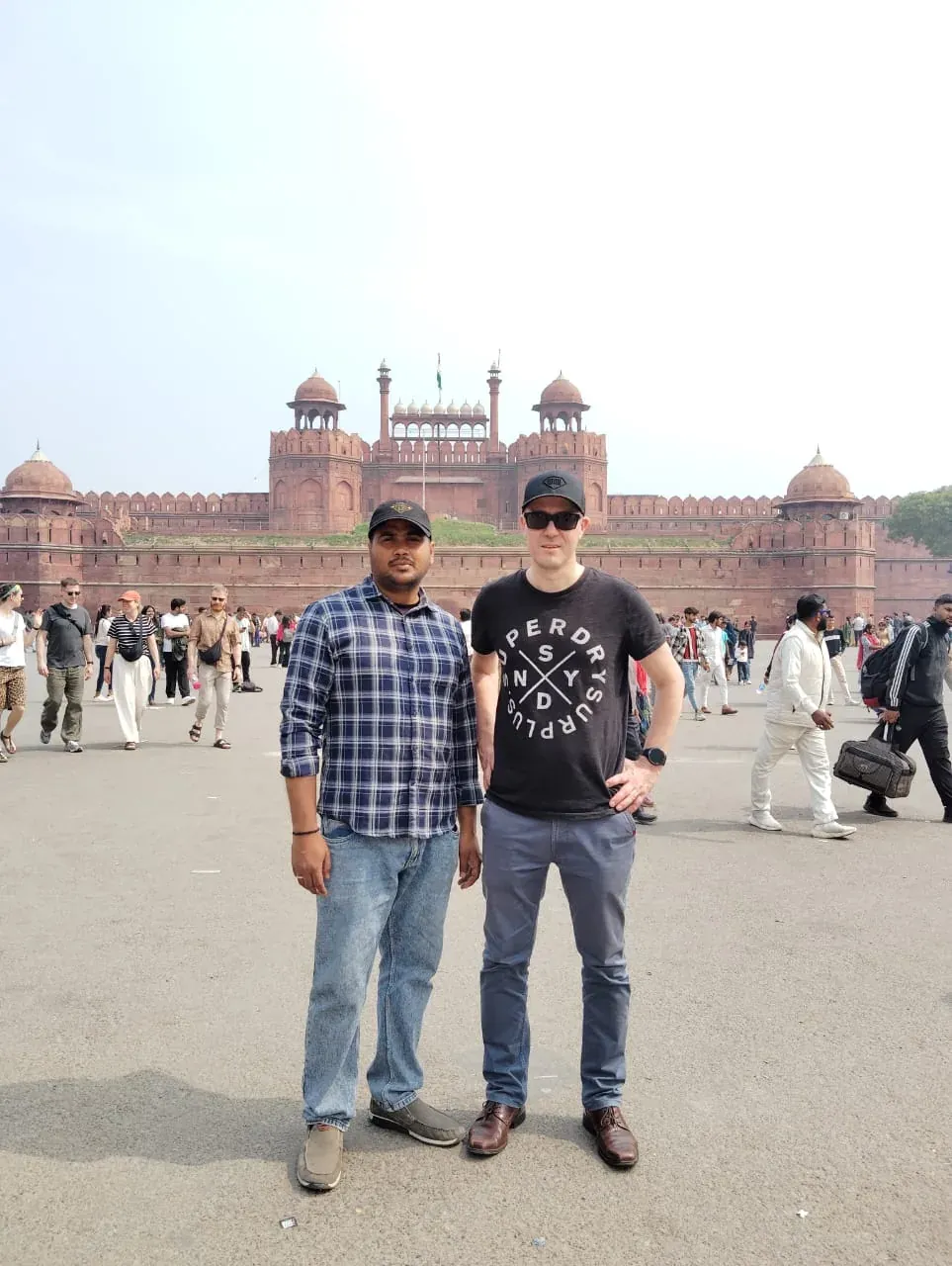
Old Delhi is Shahjahanabad, the walled Mughal capital Shah Jahan built in 1639 — dense lanes, Red Fort, Jama Masjid and the Chandni Chowk bazaars. New Delhi is the capital the British laid out between 1911 and 1931, all wide avenues, roundabouts and colonial bungalows, with India Gate at its centre.
They sit about eight kilometres apart and feel three hundred years apart, because they are. And here is the thing almost every guide leaves out: neither is the oldest part of Delhi. That is Mehrauli in the south, where Qutub Minar has stood since 1199 — four centuries before Shah Jahan laid a stone.
The short answer
| Old Delhi | New Delhi | |
|---|---|---|
| Built | 1639, by Shah Jahan | 1911–1931, by the British |
| Original name | Shahjahanabad | The imperial capital, moved from Calcutta |
| Laid out by | Mughal court architects | Edwin Lutyens and Herbert Baker |
| Feels like | Dense, loud, walkable in lanes rather than streets | Wide, green, planned — built to be driven through |
| Main sights | Red Fort, Jama Masjid, Chandni Chowk, Khari Baoli spice market | India Gate, Rashtrapati Bhavan, Connaught Place, the museums |
| Best time of day | Early morning, before the heat and the traffic | Late afternoon and evening |
| Get around by | On foot or cycle-rickshaw — cars cannot manage the lanes | Car or Metro; the distances are too long to walk |
What Old Delhi is actually like
Shahjahanabad was a walled city with fourteen gates, and the street plan has barely changed since. Chandni Chowk was designed as a grand avenue with a canal running down the middle, reflecting moonlight — that is where the name comes from. The canal is long gone and the avenue now carries more people per square metre than almost anywhere in India.
The experience is the lanes rather than the monuments. Khari Baoli is the largest spice market in Asia and has been trading since the seventeenth century. The gullies behind Jama Masjid sell wedding sequins, wiring, paper, kebabs and attar, each on its own lane, in an order that has not changed in generations.
It is also genuinely hard work. It is loud, crowded and hot, the lanes flood in monsoon, and there is nowhere quiet to stop. Most people who dislike Delhi disliked Old Delhi at midday in June. Most people who love it went at eight in the morning.
What New Delhi is actually like
New Delhi was designed to be looked at from a distance, and it shows. Lutyens laid out a ceremonial axis running from Rashtrapati Bhavan down Kartavya Path to India Gate, with government buildings on either side and very little for a pedestrian to do. It is impressive and it is not intimate.
The parts worth your time are mostly off that axis. Lodhi Garden has tombs from the fifteenth century scattered through ninety acres of park and is the calmest place in central Delhi. Connaught Place is a Georgian-style double circle of colonnades, now a shopping and eating district. The National Museum holds the Harappan collection, including the dancing girl from Mohenjo-daro.
For most visitors New Delhi is half a day rather than a full one, and it works best as an afternoon after an Old Delhi morning — which is exactly how our full-day Delhi tour is ordered.
The part of Delhi that is older than both
Delhi is usually described as seven cities, built and abandoned across eight centuries. Shahjahanabad — the one we call Old Delhi — is the seventh and last. The first is Mehrauli in the far south, where the Qutub Minar was begun in 1199, and where the Iron Pillar has stood without rusting since roughly the fourth century.
Between them are Tughlaqabad, Siri, Jahanpanah, Firozabad and Dinpanah, most of which survive as ruins scattered through what is now south Delhi. Hauz Khas has a fourteenth-century madrasa and reservoir sitting behind a row of cafés. Mehrauli Archaeological Park holds around a hundred structures across a thousand years, is free, and is almost always empty.
None of this is on a standard Delhi itinerary, which is why a visitor can leave believing Delhi is Mughal and colonial and nothing else. If you have a third day, this is where it should go.
Which should you visit?
If you only have a few hours, take Old Delhi. It is the more distinctive of the two and the one people remember — New Delhi is handsome, but a planned colonial capital is a thing you have probably seen a version of before.
If you have a full day, do both in the right order: Old Delhi in the morning while it is cool and the lanes are at their best, New Delhi and the southern monuments in the afternoon, when the sandstone takes the light. Crossing the city the other way round means Old Delhi in the heat and the crowds, and Qutub Minar under a flat midday sun.
- A few hours only — Old Delhi, and start early. Our half-day tour runs exactly this.
- One full day — Old Delhi morning, New Delhi and the south in the afternoon.
- Two days — add Mehrauli, Hauz Khas and the museums, with time to sit still.
- Three days — the seven cities properly, or an Old Delhi food walk, or a day trip to Agra.
Common questions
What is the difference between Old Delhi and New Delhi?
Old Delhi is Shahjahanabad, the walled Mughal capital built by Shah Jahan in 1639 — Red Fort, Jama Masjid and the dense Chandni Chowk bazaars. New Delhi is the capital the British built between 1911 and 1931, laid out by Lutyens and Baker with wide avenues, roundabouts and India Gate. They are about eight kilometres apart and roughly three centuries apart in character.
Is Old Delhi actually the oldest part of Delhi?
No, and this catches most visitors out. Old Delhi is the seventh of Delhi's historic cities and the most recent of them. The oldest is Mehrauli in the south, where the Qutub Minar was begun in 1199 — nearly four and a half centuries before Shahjahanabad. The Iron Pillar beside it is older still, dated to roughly the fourth century.
Which is better to visit, Old Delhi or New Delhi?
Old Delhi, if you have to choose. It is the more distinctive of the two and the part people remember — the lanes, the spice market, the food. New Delhi is a handsome planned colonial capital, but that is a type of city most visitors have seen a version of elsewhere. With a full day, do both: Old Delhi in the morning, New Delhi and the southern monuments in the afternoon.
Is Old Delhi safe to walk around?
Yes, and it is one of the busiest places in India rather than an isolated one. The real difficulties are crowds, noise and heat rather than danger — it is easy to get disoriented in the lanes and there is nowhere quiet to stop. Keep your bag in front of you as you would in any dense market, and go in the morning when it is cooler and less packed.
How do you get from Old Delhi to New Delhi?
The Metro is the fastest at rush hour — Chandni Chowk to Rajiv Chowk is a few minutes on the Yellow Line. By road it is eight kilometres that can take anything from twenty minutes to an hour depending on the time of day. Cars cannot enter most of the Old Delhi lanes at all, so any tour there is on foot or by cycle-rickshaw with the vehicle waiting at the edge.