Last updated 5 October 2026
Yes. We would say that — we take people there for a living — so here is the case made honestly, including the parts that argue against it.
The Taj Mahal is one of the few famous things that is not diminished by being famous. People arrive braced for an anticlimax and do not get one. What can ruin the day is everything around the building: the six-hour round trip, the queues, the heat, the persistence. Almost every disappointed visitor was disappointed by the logistics, not the monument.
The case for going
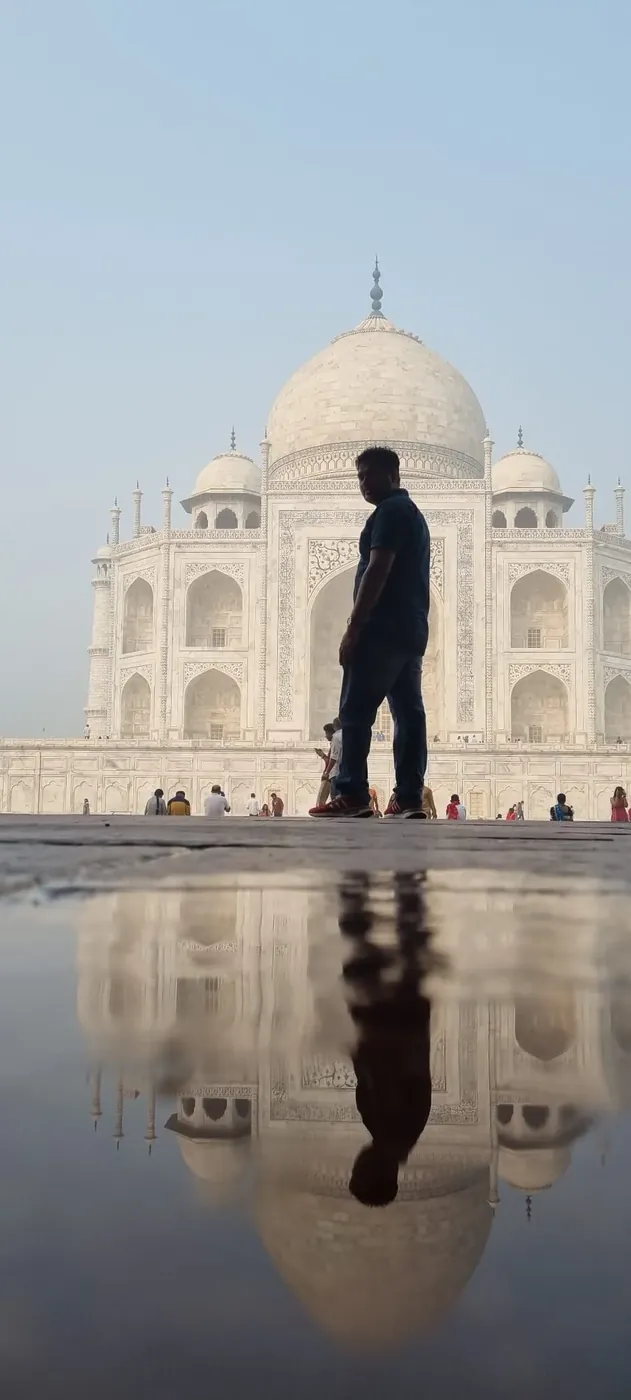
Photographs do a strange thing to the Taj Mahal. They make it look smaller and flatter than it is, and they remove the two qualities that actually land when you are standing there: the scale, and the surface.
It is much bigger than it photographs. The platform alone is substantial, and the building on top of it rises far higher than the pictures suggest. People walk through the gateway and stop, which is exactly what the gateway was designed to make them do.
And the marble is not flat white. It is semi-translucent, it carries inlaid stone in patterns too fine to register in a photograph, and it changes colour through the day — pink before sunrise, white in the middle of it, gold at the end. Standing close enough to see the inlay in the marble is a different experience from seeing the silhouette, and no image conveys it.
There is also the fact of what it is. A tomb built for one person, by someone who could command it, finished in the 1650s and still the most recognisable building in the world. Whatever you feel about that, you feel it in front of it rather than reading about it.
The case against — honestly
It is busy. On a peak-season weekend the walkways are shoulder to shoulder and the famous bench has a queue. If large crowds genuinely ruin places for you, that is a real consideration and not a small one.
It is far. From Delhi it is roughly three hours each way, which makes a day trip a twelve-hour day. You will spend more time travelling than looking.
The approach is commercial and persistent. Between the car park and the gate you will be offered guiding, photography, souvenirs and marble, repeatedly.
And the visit itself is shorter than the effort implies. Most people see what they came to see in ninety minutes to two hours. That is a long way to go for two hours, and it is a fair thing to weigh.
What separates a good visit from a bad one
Almost everything. The difference between people who describe it as the highlight of their trip and people who describe it as overrated comes down to four decisions, none of which are about the monument.
| Decision | The good version | The disappointing version |
|---|---|---|
| When you arrive | At opening — thin crowds, soft light, cool air | Mid-morning, into the heat and the peak of the queue |
| Which day | Any day but Friday; a weekday if you can | A weekend or a public holiday in peak season |
| How long you allow | Two to three unhurried hours | Ninety minutes with a driver waiting and a clock running |
| How you got there | Pre-arranged car or train, no street negotiation | Arranged on the day, with a commission stop built in |
Go at opening, or do not bother going
If you take one thing from this page, take this. The Taj Mahal opens about thirty minutes before sunrise, and the first hour is a different monument from the rest of the day.
The crowds are a fraction of what they become. The light is doing the thing the marble was built to do. The temperature is bearable even in summer. And the touts are mostly not awake yet.
By ten in the morning the walkways are full, the light is flat and white, and in summer the marble is too hot to walk on barefoot. The same building, a markedly worse experience, for the sake of three hours.
Our sunrise guide covers the gate times and what actually happens when you get there, and the best time of day compares sunrise against sunset and midday properly.
One day or two?
A day trip from Delhi works and most people do it. It is a long day — roughly twelve hours door to door by car, eleven by train — and you will see the Taj Mahal and Agra Fort and little else.
An overnight changes the arithmetic considerably. You arrive in the afternoon, see Agra Fort when it is quiet, sleep in Agra and walk into the Taj Mahal at opening without having driven three hours first. You also get the option of sunset on one day and sunrise on the next, which is the only way to see both without a very strange schedule.
If the Taj Mahal is a major reason you came to India, the overnight is the better trip and it is not close. If it is one item on a crowded week, the day trip is the sensible compromise.
Is it worth it with children?
Younger children tend to find the Taj Mahal less interesting than the adults with them, which is not surprising — it is a building you look at rather than a place you do something in. Agra Fort usually goes better; it has ramparts, courtyards and the sense of a real castle.
What makes it workable is a short visit at the right time. Arrive at opening, allow ninety minutes rather than three hours, and go straight to the fort or to breakfast afterwards. Trying to extend it into a long morning in the heat is where family days go wrong.
The verdict
- First trip to India, Delhi-based, two days or more — go, and go at opening
- Taj Mahal is a main reason you came — go, and stay the night in Agra
- One day in India and you want a city rather than a monument — Old Delhi gives you more
- Travelling in May or June with no heat tolerance — reconsider, or go in winter instead
- Mobility difficulties — possible but demanding; the distances inside are long and shaded seating is scarce
- You have seen it before — Agra Fort and Fatehpur Sikri are the better second visit
Common questions
Is the Taj Mahal worth visiting?
Yes for most people, and the reason is that it does not photograph the way it looks. The scale and the translucency of the marble are the two things that land in person and never survive an image. What ruins visits is the logistics rather than the monument — the heat, the crowds and a rushed schedule. Go at opening, allow two hours, and it is very hard to be disappointed.
Is the Taj Mahal overrated?
Overcrowded, yes. Overrated, no — and that distinction is the whole answer. The people who come away unimpressed almost always arrived mid-morning in peak season, queued in the heat and had ninety minutes before a driver wanted to leave. The building is not the problem; the schedule usually is.
How long do you need at the Taj Mahal?
Two to three hours is comfortable and unhurried. Ninety minutes is enough to see it properly if you are moving with purpose. Less than an hour is possible but you will spend it walking rather than looking, and you will have travelled three hours each way for it.
Is the Taj Mahal worth a day trip from Delhi?
Yes, and thousands of people do it — roughly twelve hours door to door by car, eleven by the Gatimaan Express. It is a long day and you will see the Taj Mahal and Agra Fort and not much else. If the Taj Mahal is a main reason you came to India, an overnight in Agra is a better trip: you walk in at opening without having driven three hours first.
Is the Taj Mahal worth it with kids?
With a short visit at the right time, yes. Younger children usually prefer Agra Fort, which has ramparts and courtyards and feels like a castle. Arrive at opening, allow about ninety minutes rather than three hours, and move on before the heat builds — family days go wrong when they are stretched, not when they are short.
What is the worst time to visit the Taj Mahal?
A weekend or public holiday in peak season, arriving mid-morning, in May or June. That combination gives you the largest crowds, the flattest light and marble too hot to stand on barefoot. Friday is a separate matter — it is closed to tourists entirely.
Should I see the Taj Mahal or spend the day in Delhi?
If you have two days or more, do both. If you genuinely have one day in India and you would rather be somewhere lived-in than somewhere visited, Old Delhi will give you a fuller day than a twelve-hour round trip for two hours at a monument. There is no wrong answer, only the one that matches what you came for.